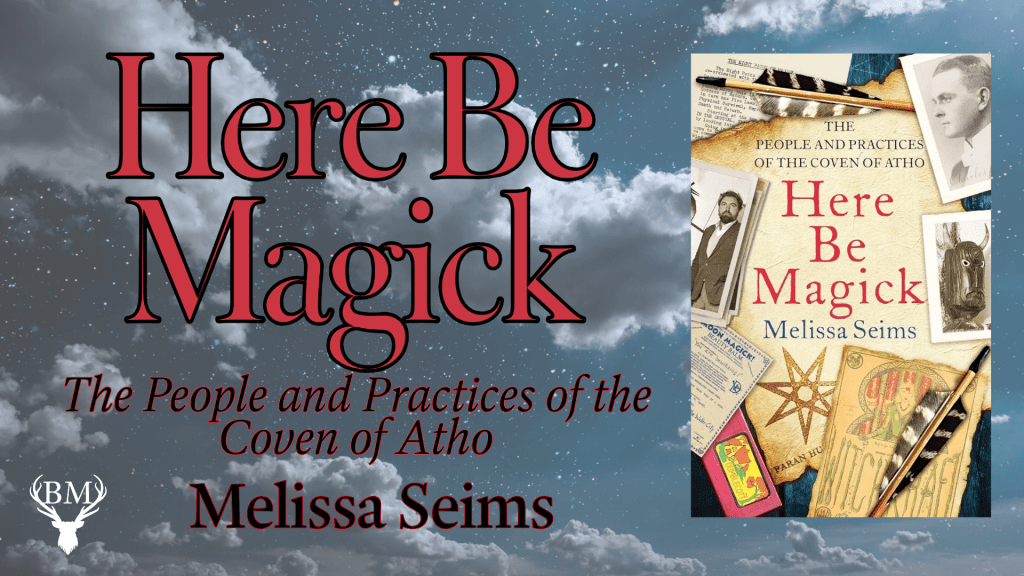
I feel as if there is a certain romance that goes hand in hand with the Witchcraft of the 1960s—circles, covens, and secrets, all add to the ambiance of the era. It was a lively time for the Craft, indeed, giving rise to various magical traditions including Gardnerian Witchcraft, Alexandrian Witchcraft, the Clan of Tubal Cain, to name a few. Perhaps one sect of Witchcraft from this time period that I knew the least—okay…nothing—about was a mysterious group called the Coven of Atho, the history of which was explored in Melissa Seim’s book Here Be Magick: The People and Practices of the Coven of Atho.
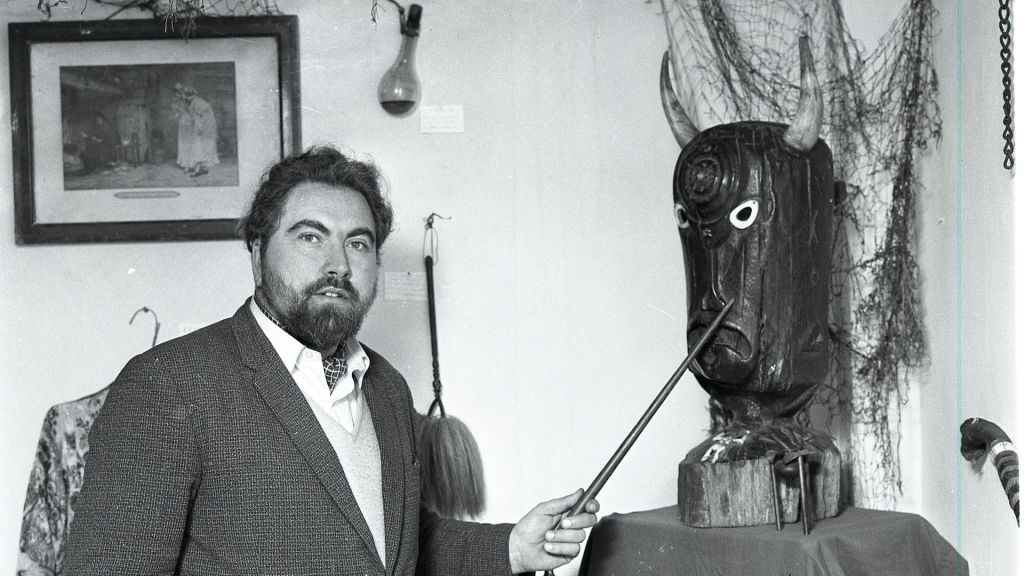
If you are like me and perhaps weren’t familiar with the Coven of Atho before, a little background might be needed. This particular tradition of Witchcraft was pioneered by a man named Charles Cardell and focused on the worship of a horned god known as Atho. (Hence the name of the coven.) Interestingly, this sect of the Craft seemed to differ greatly from the other more well-known manifestations of practice in that it placed emphasis on the worship of this God as opposed to a goddess. Here, Atho was presented as a primal hunting god.
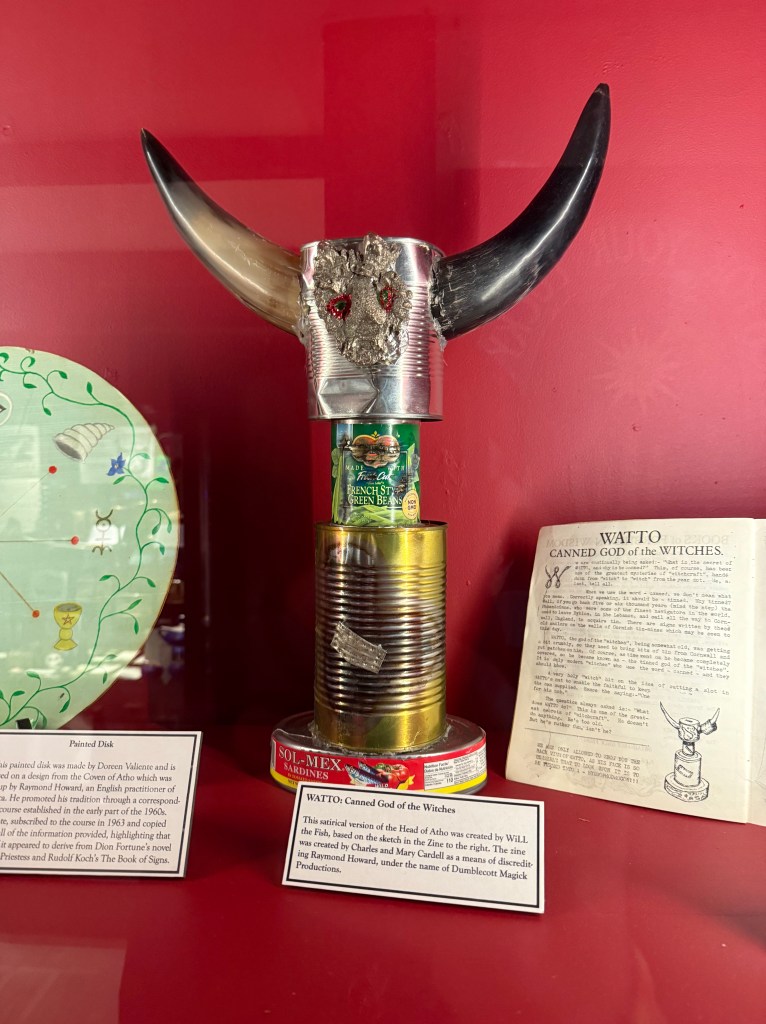
I also found it interesting to learn that while Cardell was the primary driving force behind this tradition of magic, he wasn’t the actual one who founded the coven. That was actually the work of one Ray Howard, but used Cardell’s ‘Old Tradition’ of witchcraft as the framework for it. These two had an eventual falling out, and it didn’t end peacefully! It never does, I suppose, and Cardell went on to attempt to discredit much of the work that Ray was doing. Watto the Canned God of the Witches, for example, was one of the humorous jabs that Cardell had taken. I had first stumbled upon this Canned God at the Boscastle Museum of Witchcraft and thought the ingenuity of it was incredible. As you can see from the picture below, this was a Horned God made as a parody to Howard’s Head of Atho. When asked what it does, the answer was quite simple: He doesn’t do anything.
I am certainly here for the drama of the 1960s, and would strongly recommend that anyone who wants a glimpse into witchcraft’s more obscure history dive into this book. Hell, even Doreen Valiente was initiated into the Coven of Atho which only reinforces her as the matriarch of modern witchcraft—she had a hand in everything, and her eyes on everything, as mothers often do. It’s quite amazing to see where she added her own flair to things within the coven’s magical practices.
Despite the fallout of Cardell and Howard, though, they were both still Witches, and as such, they possessed their own set of magical beliefs and instructions which were certainly worth some further contemplation. Consider this passage from the book:
“So you see, magic is a real ‘do it yourself’ effort.”
“But should he succeed, and believe me he can succeed, he gains a flash of consciousness lasting perhaps ten seconds, but that is sufficient reward for all the work he has put in. He gains in that moment of time what is called: samadi, cosmic consciousness, or The Kingdom.” (p. 130)
We are also given this:
“It is absolutely impossible for an intellectual person to perform the simplest act of magic successfully. Magic is an emotional act; therefore must be performed by a person of trained emotions. All ceremonial magic is an endeavour to raise the emotions to a high pitch of sensitivity. That is why there are so many odd people trying to practice magic, and failing. They are trying intellectually to perform something quite outside their capabilities.” (p. 130)
While there are some spells in this book, they are not presented in the way you’d imagine a spellbook to be set up. Rather than providing specific instructions for how to perform a certain ritual, we are given snippets of practices in the form of old notecards from Ray which were transcribed by the author. Even so, there are still good bits of lore that can be applied to other traditions or simply meditated on privately. The Five Circles, for example, offer the primary reasons why we work in circles. Yes, we know they protect, contain, and so on, but to have a set of very specific beliefs regarding the circle made it so much more…potent…for lack of a better word. The five rings are:
- Fertility: the circle is concerned with all forms of fertility, primarily with fertility of Spirit.
- Brotherhood: the circle gathers all people for the purpose of helping them to the knowledge handed down.
- Vitality: this is the reproduction of the body, the pleasures of the flesh.
- Travel: trancework, spirit flight, and the like.
- Return: the way back home after magical work is done.
This book is not one to read if you want a quick fix to your problems, but does an incredible job of gathering up more of our history as Witches into an easily accessible place while still offering timeless bits of magical wisdom that will encourage thought and deeper conversations with your fellow witches.
Last note: Don’t be intimated by the high page count! The second half of the book is the “Atho Book of Magic” which, as the author states, was a term loosely coined by her. To her knowledge, there was not officially book from this coven.
Book Information
- Here Be Magick by Melissa Seims
- Publisher: Thoth Publications
- Publication Date: April 30, 2022
- Dimensions: 6×9
- Page Count: 568
- Purchase link
 Blake Malliway
Leave a comment