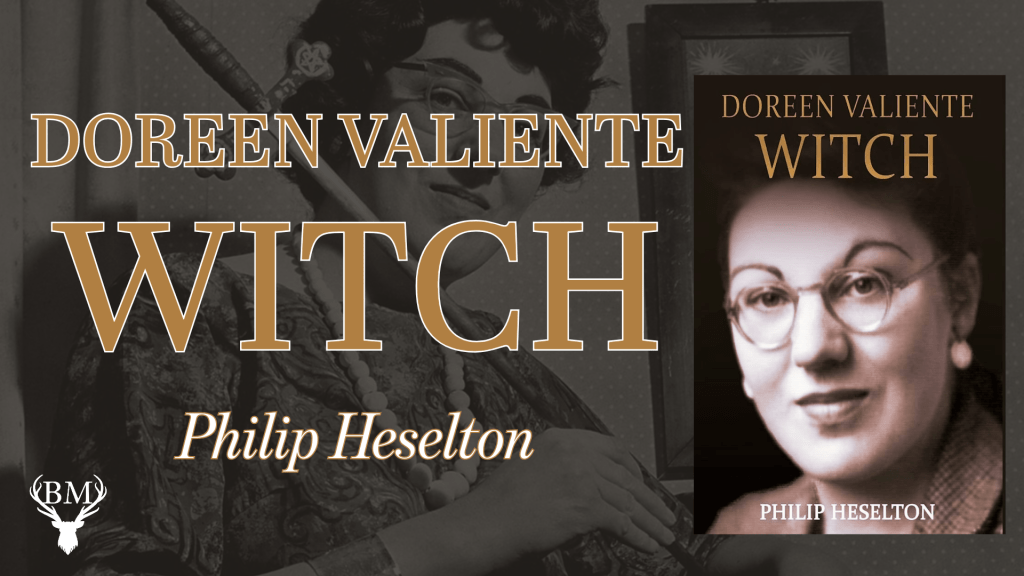
It’s hard to believe that this book was published nearly a decade ago. I bought it new back then and had every intention of reading it, but alas, I never got around to picking it up again until recently. I regret my laziness with this book. It was absolutely captivating and I devoured it in its entirety in two days’ time. I believe that all witches today owe a debt of gratitude to Doreen. She threw herself into the thick of it all back then, sussing out the good from the bad so that all Witches today could practice their craft freely and [generally] without persecution, and how refreshing it must have been for Doreen to have been able to see this unfold in her lifetime. She reflects on this during her last speaking engagement at the Pagan Federation:
People today have no conception of how uptight and repressive society was back in the 1950s when old Gerald first opened up the subject of Witchcraft as a surviving old religion. You could not go into a ship then and buy a pack of Tarot cards or a book on the occult, without getting curious looks and usually a denial that they stocked any such things…in those days, such a conference as this would not have been allowed. You would have been closed down by the police! Times have indeed changed, and only the older generation like myself realise by how much. (p. 302)
It’s true that we don’t know we’re experiencing a Renaissance until afterwards, that word being used in retrospect as opposed to a self-defining label, but of all people, it seems that Doreen was very well aware of the rebirth that the Old Craft was experiencing during her era.
As all biographies do, this book opens with the first few chapters outlining Doreen’s family life and upbringing. Learning about her childhood certainly made her seem more human and relatable, and outlines how even at such a young age, the mysteries and magic of the Craft were still very much present for her. She talks about how as a child, one of her favorite activities was galloping about on a broomstick! She didn’t consciously associate this with Witchcraft, and she used just a regular pushbroom, but it was just a bit of childhood fun. (p. 21) She wrote:
It was years later that I learned how witches did indeed ride broomsticks in this way, in kind of a dance over the fields to make the crops grow tall…was I reliving the wild, care-free Witch-dance of previous incarnations, when as a small child I so enjoyed my broomstick gallops? (p. 21)
The rest, as they say, is history. It would seem that she was always fated to become a Witch, eh?
The book does a delightful job of describing her eventual meeting with other well-known Witches including Gerald Gardner (obviously), Patricia Crowther, Charles Cardell (Coven of Atho), and Robert Cochrane, to name a few, and it would seem that no matter which tradition she found herself in, she managed leave a memorable mark on all of them.
Something I didn’t know about Doreen, but just loved finding out, was her love for ritual out in nature. It was for this reason that she loved the ritual structure of Robert Cochrane’s Clan of Tubal Cain. Their ecstatic and improvised ritual often held out of doors in the forests and countryside allowed Doreen to connect with the timeless, powerful forces of nature.
I certainly saw a bit of myself in her, too. I am an avid book collector, and apparently so was Doreen! She had over 2000 books on the occult towards the end of her life and her method of organizing them seemed awfully similar to mine—walk over to that bookcase, third shelf down, second row back, find the book with the red cover. Open to page 187 or 188 and you’ll find what you’re looking for.
She also had an affinity for the odd and unusual. My favorite anecdote from the book is Hob, a face carved into a coconut shell that she found at a thrift shop. She’d gotten in the habit of asking Hob to look after things while she was out, a practice that really exemplifies her relationship with spirits. (Seems unusually similar to a lot of “traditional” witchcraft spirit practice, eh?)
Doreen is considered to be the Mother of Modern Witchcraft for a reason. Her kindness, straightforward, no nonsense attitude, and her desire to dive deep into the Craft are the traits that made her as well-known as she is. I believe we owe to ourselves as witches to learn as much as we can about where the craft came from, so we can appreciate where it is today, and this book does just that.
Book Information
- Doreen Valiente Witch by Philip Heselton
- Publisher: The Doreen Valiente Foundation
- Publication Date: February 22, 2016
- Dimensions: 6X9
- Page Count: 340
- Purchase here
 Blake Malliway
Leave a comment